

Air Liquide, the quiet engine of the revolution
Air Liquide closes its ADVANCE plan with record 2025 results and accelerates in low-carbon hydrogen and gases for electronics, while preserving its margins and its dividend.
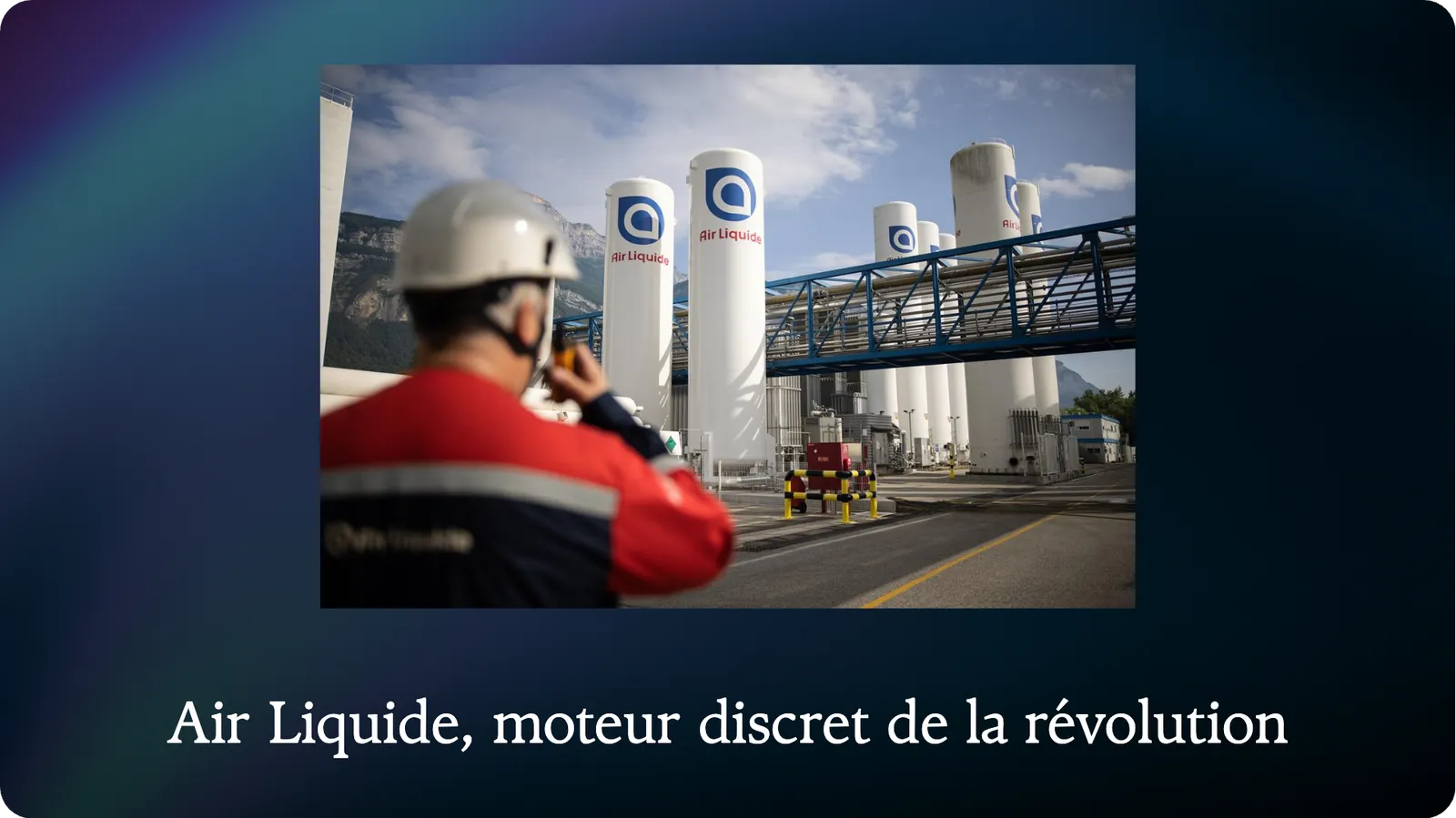
Air Liquide remains one of the few French industrial groups present simultaneously in low-carbon hydrogen, gases for semiconductors and home healthcare. Its ADVANCE strategic plan, set for the 2022-2025 period, ended with objectives "met or exceeded", according to the annual results release published on February 20, 2026 and distributed by the AMF via the DILA. The group is preparing what comes next by betting on two engines: the energy transition of industry and advanced electronics.
A solid 2025 despite a difficult environment
In 2025, Air Liquide's revenue stood at 26,940 million euros, up 2.0% on a comparable basis and down slightly by 0.4% as published, due to unfavorable currency effects, according to the official release. The operating margin reached 20.7%, up 80 basis points, and recurring net profit 3,679 million euros (+6.2%). The group generated 631 million euros in efficiencies, a sign of tight cost management.
This ability to defend its margins amid energy tensions and sluggish industrial demand in Europe explains the loyalty of individual shareholders. The dividend proposed to the general meeting of May 5, 2026 amounts to 3.70 euros per share, up 12.1%, together with a free share allocation, as Tradingsat also notes. Its image as a "safe, family-portfolio stock" rests on this regularity.
Low-carbon hydrogen, a long-term bet
In 2025, Air Liquide took the final investment decision on the ELYgator project in the Netherlands, a 200 MW electrolyzer backed by the Dutch government, and created a 50/50 joint venture with TotalEnergies to study a 250 MW electrolyzer at the Zeeland refinery. In the United States, it is growing its hydrogen sales on the Gulf of Mexico coast by relying on its pipeline networks. The group also claims a world first: an industrial-scale technology for converting ammonia into hydrogen, which paves the way for new low-carbon supply chains.
On climate, the release reports a 13% reduction in CO₂ emissions compared with 2020 and a carbon intensity down 46% since 2015. The development of low-carbon power purchase agreements (3 TWh per year started in 2025) supports this trajectory. These commitments nevertheless remain dependent on the pace of industrial demand and on public support for hydrogen, which has slowed in Europe.
Electronics, driven by semiconductors
In electronics, growth excluding equipment sales reached 5.8% in 2025. Air Liquide is investing more than 250 million euros in Germany for a major semiconductor manufacturer in "Silicon Saxony", is building new units in Singapore and the United States, and has inaugurated a molybdenum plant in South Korea, an advanced material for next-generation chips. The acquisition of DIG Airgas in South Korea, for around 3 billion euros, further strengthens this exposure to the semiconductor market.
What is at stake for businesses
For industrial customers, Air Liquide is a critical supplier: industrial gases, hydrogen and ultra-pure gases determine the continuity of their production lines. For energy and semiconductor players, its investment choices signal the regions and technologies where demand is actually materializing. For investors, the group serves as a barometer of the health of global industry. For 2026, it is targeting a further 100 basis point increase in its operating margin, then another 100 points in 2027.
What monitoring teams should watch
- Final investment decisions on electrolyzers in Europe and the United States, as well as changes in public support for hydrogen: technology monitoring makes it possible to distinguish announcements from projects that are actually funded.
- Contracts signed in electronics (Germany, Singapore, South Korea, United States), leading indicators of chip production capacity.
- The integration of DIG Airgas and the moves of other industrial gas players, to be tracked as part of competitive intelligence.
- The climate indicators published by the group and any controversies over its emissions, to be included in ESG monitoring.
Sources
Go deeper
All reportsThree NewsCore reports that build on this article.